1 New Rule: Data Centers Must Give Back Energy
The White House is pushing for AI facilities to share surplus power with nearby residents to offset rising local utility bills.
By Thabo Mokoena ·
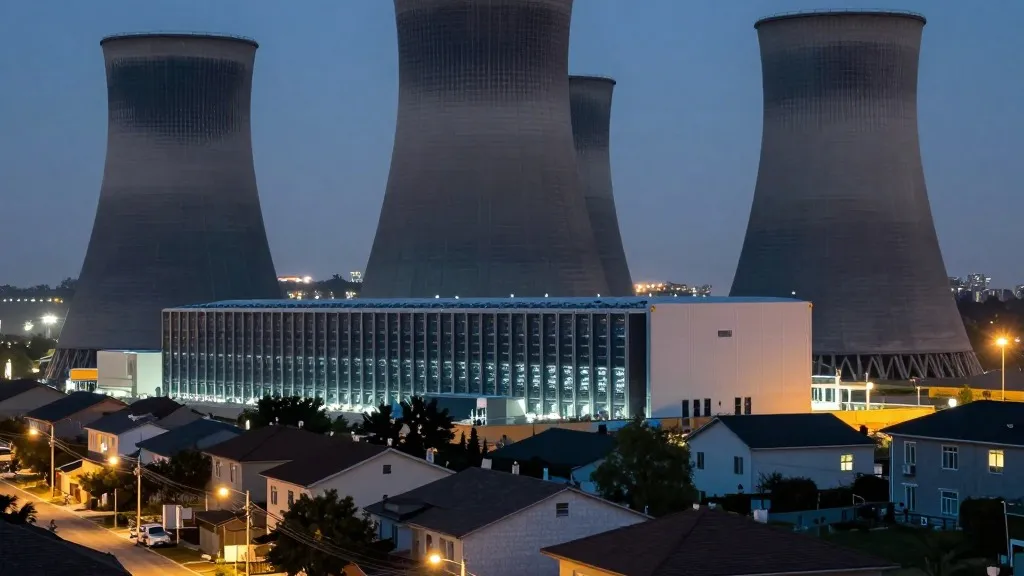
Residents living near artificial intelligence data centers may soon see a shift in how their local power grid operates. The White House has issued a new directive calling for these massive facilities to distribute excess energy back to the communities they serve. This move aims to directly address the primary complaint of many local households: skyrocketing electricity bills.
The policy comes as a direct response to widespread protests across the United States. Many small towns and rural areas have pushed back against the rapid expansion of AI infrastructure. Residents have cited several issues, including increased noise pollution, local water shortages, and air quality concerns. The most immediate financial burden has been the spike in energy costs for homes located in the vicinity of these power-hungry buildings.
President Donald Trump outlined the plan in a post on Truth Social. He stated that data center builders and major AI companies will be required to make their own electricity. Crucially, he added that they must then give or sell any surplus power back to the local community. The goal is to use this shared energy to prevent price hikes or even drive costs down for nearby residents.
The administration views this as a strategic move in the global AI race. The United States is keen to stay ahead of China in developing and deploying artificial intelligence. By making data centers more acceptable to local populations, the government hopes to accelerate construction timelines. This approach seeks to win back public favor by ensuring that affected communities receive a tangible benefit in the form of lower energy expenses.
This mandate builds on previous executive orders. The administration had already required these companies to generate their own power rather than relying solely on the existing grid. A recently passed act also requires data centers to cover the costs of necessary grid upgrades. This ensures that local taxpayers do not bear the financial burden of expanding the electrical infrastructure to support these new facilities.
The President argued that financial incentives can turn public opinion around. He noted that data centers are often unpopular in specific areas until a financial deal is struck. He urged builders to make these deals quickly to get projects built. The hope is that sharing the economic load will make the presence of these large facilities more palatable to neighbors.
However, the scope of the solution remains limited to the economic aspect of the issue. While lower electricity bills are a significant benefit, they do not address other environmental concerns. Issues such as enormous water consumption, ecological damage, and pollution remain major challenges. These factors continue to make data centers a difficult sell for many communities, regardless of the energy dividend.
The practical implementation of this mandate is still unclear. It is not yet defined how the dividend will be calculated or distributed. Some observers question whether companies will be profitable enough to pay such dividends in the early stages of construction. Additionally, the type of power generation currently being installed, often gas-powered generators, may not be the cleanest option for immediate local benefit. The long-term success of this policy will depend on how these details are finalized.
For now, the directive sets a new standard for the relationship between AI infrastructure and local communities. It shifts the focus from simply building capacity to sharing the benefits of that capacity. Whether this energy sharing will be enough to silence local critics remains to be seen, but it marks a significant change in how the government approaches the growth of the AI sector.
Source: Tom's Hardware