The 1,000-Song Device That Launched 25 Years Ago
Apple's first portable music player, which went on sale with a five-gigabyte drive and a promise to carry a user's entire music library, turned 25 years old on October 23.
By Eduardo Salazar ·
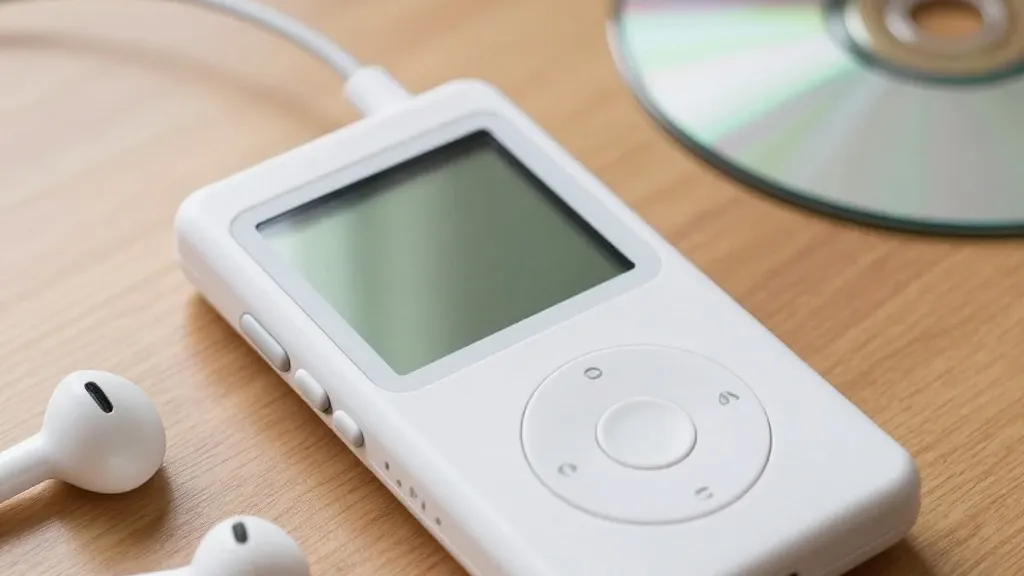
On October 23, 2001, Apple CEO Steve Jobs took the stage to unveil a new product category for the company, which was then in the midst of a commercial recovery driven by its iMac and iBook lines. He began by teasing “a breakthrough digital device that’s not a Mac,” before revealing the iPod, a pocket-sized music player priced at $399.
The device shipped with a 5GB hard disk drive, a capacity Apple promoted as sufficient to store 1,000 songs, specifically typical pop-song length MP3 files at 160Kbps. “For most people it’s their entire music library,” Jobs told the audience. The physical dimensions were comparable to a deck of cards, measuring 2.4 by 4 by 0.78 inches and weighing 6.5 ounces, which Jobs described as “lighter than most cell phones.”
Jobs explained that Apple’s decision to enter the music market stemmed from the belief that while there was no clear leader, the category was a large target audience. He acknowledged that companies such as Creative, Sonic Blue, and Sony already offered portable digital music players, but stated that “none of them has really found the recipe yet, for digital music.” He identified hard disk-based jukebox players as the optimal entry point for Apple.
The hardware relied on a 1.8-inch Toshiba hard drive that was 0.2 inches thick. The device supported MP3, WAV, and AIFF formats and offered 20 minutes of skip protection. It also featured a lithium-polymer battery capable of 10 hours of continuous playback, with the ability to reach an 80% charge in one hour.
A primary technical differentiator was the use of FireWire 400 for connectivity and charging. Jobs claimed the connection could transfer a CD to the device in five to 10 seconds, whereas USB connections of the era required approximately five minutes for a single disc. Apple estimated that filling the iPod’s 1,000-song capacity would take 10 minutes via FireWire, compared to five hours using a USB player.
Software integration was also central to the launch. iTunes 2 was released the same day, featuring Auto-Sync capabilities that automatically mirrored a user's Mac music library to the device when connected. The hardware design included a scroll wheel with a piezoelectric clicker for tactile feedback to facilitate navigation by playlist, artist, or song. The first song demonstrated during the presentation was Sarah MacLachlan’s 'Building a Mystery'.
The iPod remained a core part of Apple's product stack for over a decade, operating alongside the iPhone after its launch in early 2007. The final hardware iteration was the 7th-generation iPod Touch in May 2019, and the product line was officially discontinued in May 2022.
Source: Tom's Hardware