London Restaurant Owners Expand to Gulf as Domestic Tax Costs Rise
High-end UK dining groups are opening branches in the Middle East to seek better profit margins and lower tax burdens.
By Jian Chen ·
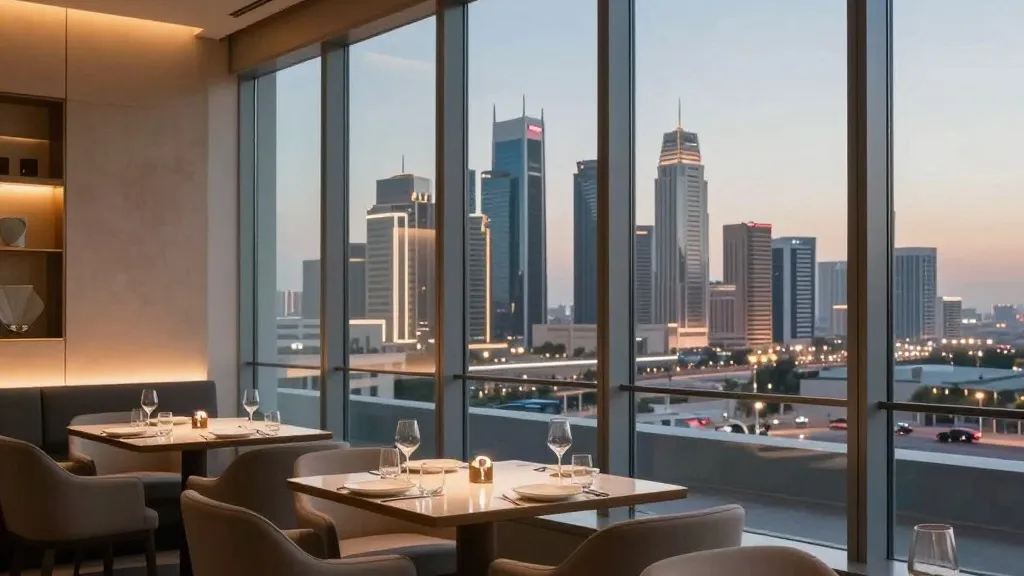
For operators of premium dining establishments in the United Kingdom, the financial outlook is shifting toward the Middle East. Several high-profile London restaurants have signed agreements to open locations in the Gulf region. This expansion is driven by a combination of higher domestic tax rates and what one co-owner describes as a more favorable work ethic abroad. The move aims to secure stronger margins in a competitive international market.
The tax environment in the UK is a primary factor in these decisions. Hospitality Value Added Tax stands at 20%, a rate that is among the highest in Europe. The average rate for restaurants across the continent is approximately 12%. In comparison, Italy charges 10% on food sold in dining venues. Industry leaders are urging the government to lower this rate in the upcoming budget. They argue that the current structure places a significant burden on the sector.
James Robson, co-owner of Fallow in St James's Market, has recently finalized a deal to open an outpost in the region. Fallow is considered one of the capital's most popular venues and serves 1,000 customers daily. The restaurant gained significant attention through social media, where it has amassed 650,000 followers. Its menu features distinctive dishes, such as a whole cod's head covered in a spicy butter sauce, which helped build its brand recognition.
Fallow is part of a broader trend of UK hospitality brands expanding into the Gulf. Scott's of Mayfair, known for attracting celebrities, has already opened in Dubai. The two Michelin-starred Indian restaurant Gymkhana and the upmarket Chinese venue Park Chinois have also established a presence there. Additionally, the Borough Market bakery Bread Ahead has branched out to Dubai, while Isabel's, a Mayfair institution popular with political figures, has opened in Abu Dhabi.
These openings proceed despite recent geopolitical tensions in the region. Earlier this year, conflict involving the US, Israel, and Iran led to bombardment in Dubai and prompted an exodus of expatriates. Some local dining establishments are still recovering. Dinner by Heston has remained temporarily closed since the war's fallout. The Michelin guide also faced criticism in early October for listing 16 restaurants that were closed. This occurred because some inspections were conducted at the start of the year, before the conflict began.
Robson is currently in Hong Kong, where he is evaluating opportunities in Asia. He identified East Asia, the United States, and the Gulf as key growth targets for the industry. He noted that America supports business, the Gulf actively encourages investment, and East Asia offers a work ethic and taxation system that contrasts sharply with the UK. This strategic focus reflects a desire to diversify revenue streams across different economic environments.
Chef Jason Atherton, who holds Michelin stars, now spends one-third of his time at his Dubai restaurant. He stated that it is easier to generate profit abroad than in London. Robson added that while he is proud to contribute to the UK's deficit through taxes, he feels the country has moved into a phase of multiple anti-growth taxations over the last two budgets. He expects further changes next week and pointed to 25% corporation tax and dividend taxes of 40% or more. He believes the UK growth model no longer offers a sensible balance of risk and reward, leading him to play it safe at home while focusing on overseas expansion.
Human rights groups are urging caution regarding these new ventures. Felix Jakens, director of campaigns at Amnesty International UK, noted that the UAE has a poor record on workers' rights and protection from labor exploitation. He argued that the country's heavy spending on its image in the UK, particularly through Manchester City, should not obscure the treatment of its workforce. Migrant workers, who make up the majority of the UAE's population, remain bound by a sponsorship system that ties them to their employers. This system can expose them to abuse and denies them the right to form trade unions. Jakens emphasized that any UK business expanding into the Gulf must conduct proper human rights due diligence to ensure kitchen staff are treated fairly, paid properly, and able to raise concerns without fear of losing their job or visa.
Source: The Guardian
More Business · World news · Rip-Off Report · Report a business