SpaceX Rejects Military Contracts as Spain's Miura 5 Nears Final Integration
A shift in US space policy sees SpaceX turn down government work while a European startup prepares its rocket for its maiden voyage.
By Min-jun Kim ·
The relationship between commercial spaceflight and government procurement is entering a period of unusual friction. This week, SpaceX made headlines by declining three potential military launch contracts offered by the US Space Force. The rejection signals a significant strategic pivot for the company, suggesting a preference for commercial independence over steady government revenue in the near term. This move occurred alongside new technical data regarding the company's flagship vehicle, creating a complex narrative of expansion and caution simultaneously.
The decision to pass on the military work appears to be part of a broader reassessment of the company's portfolio. While the specifics of the contracts were not detailed in public statements, the timing suggests SpaceX is prioritizing its internal development roadmap. For non-experts, this might seem counterintuitive, as government contracts often provide the financial stability needed for heavy R&D spending. However, the company's leadership seems to be betting on the rapid growth of its commercial Starlink and Starship operations to fund future projects without the added complexity of military requirements.
In parallel, NASA's safety review panel released findings that add technical tension to the Starship narrative. The panel indicated that a lunar landing mission supported by Starship may require as many as 22 in-orbit refueling operations. This number highlights the immense engineering challenge of assembling a spacecraft in space. Each refueling event adds a layer of risk and complexity, requiring precise docking maneuvers and fuel transfers. The panel's assessment serves as a reality check for the ambitious timelines often discussed in public forums.
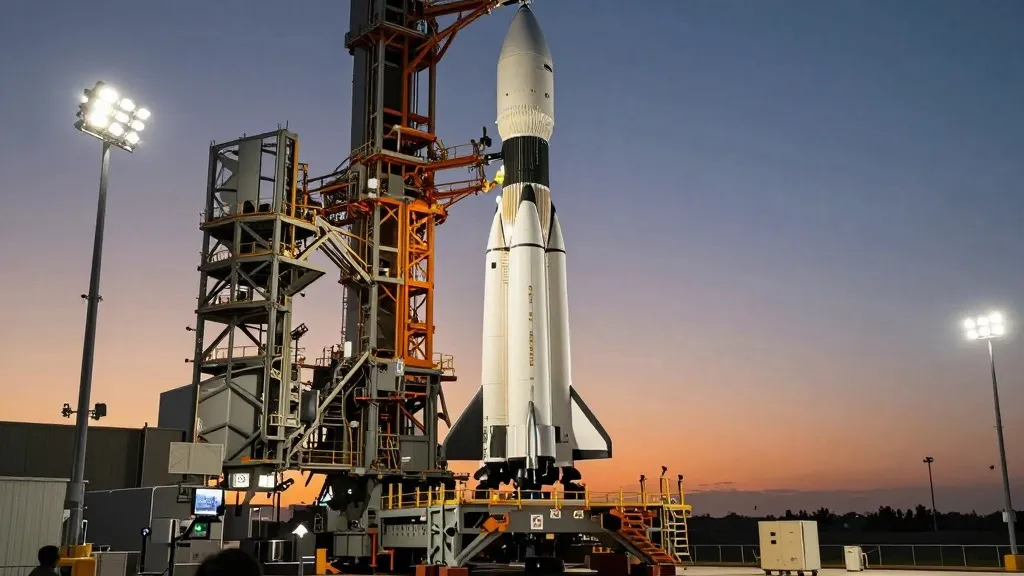
While the US space sector grapples with these internal strategic and technical questions, a significant development is taking place in Europe. PLD Space, a Spanish startup, has announced that its Miura 5 rocket is nearing the final stages of integration. This small-lift vehicle is scheduled for its inaugural launch next year, marking a crucial milestone for the European launch industry. The company has already manufactured three units of the rocket, with two designated for qualification testing of key system elements.
Raúl Torres, the CEO of PLD Space, provided an update on the progress during a program briefing on October 19. He explained that the manufacturing of the three vehicles has allowed their engineering teams to work continuously across different production phases. This approach ensures that lessons learned from qualification campaigns are directly applied to the launch vehicle. The company now targets a first flight before mid-2027, a timeline that reflects the accelerated pace of modern rocket development.
The technical readiness of the Miura 5 is evidenced by the current status of its components. One second stage is now fully integrated, initiating system-level testing under conditions that represent actual operation. This stage is located at PLD's test facility in Teruel, where it is undergoing a rigorous qualification campaign. The testing protocol includes a wet dress rehearsal and a static hot-fire test, both of which are critical steps in verifying the reliability of the engine and structure before a real flight.
The broader launch startup ecosystem is also seeing significant capital movement. In Canada, Reaction Dynamics, one of the three prominent launch startups in the region, is seeking to raise $350 million. This funding round is intended to support rapid growth, expanding the company's staff from 68 to more than 350 employees. The capital will be used to accelerate the development of the Aurora rocket, a small-lift vehicle that the company hopes will reach orbit by 2028.
Reaction Dynamics is not stopping at small-lift capabilities. The company has also announced plans to develop a medium-lift rocket named Borealis, with a debut targeted for 2031. This dual-track approach allows the company to establish a presence in the small-lift market while preparing for more complex missions in the future. The influx of investment into these startups suggests that investors remain confident in the long-term potential of the commercial space sector, even as established players like SpaceX navigate shifting government dynamics.
As we look ahead, the next three launches on the calendar will provide early indicators of how these strategic and technical shifts play out in practice. For SpaceX, the next steps will likely involve further clarification on its commercial strategy and continued testing of the Starship system. For PLD Space, the focus remains on completing the qualification tests for the Miura 5 to ensure a safe and successful first flight. The coming months will be pivotal for both the US and European space industries as they balance ambition with operational readiness.
Source: Ars Technica