West Bank Conflict: Hebron Residents Face Mass Displacement as Bulldozers Roll In
Israeli forces have begun a major demolition campaign in Hebron, forcing hundreds of families from their homes just days before national elections.
By Priya Sharma ·
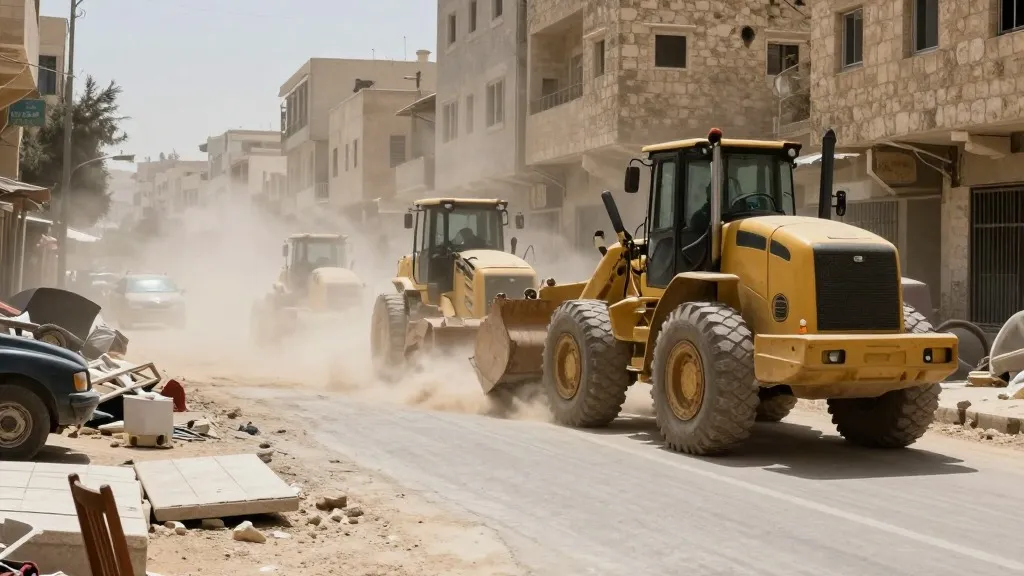
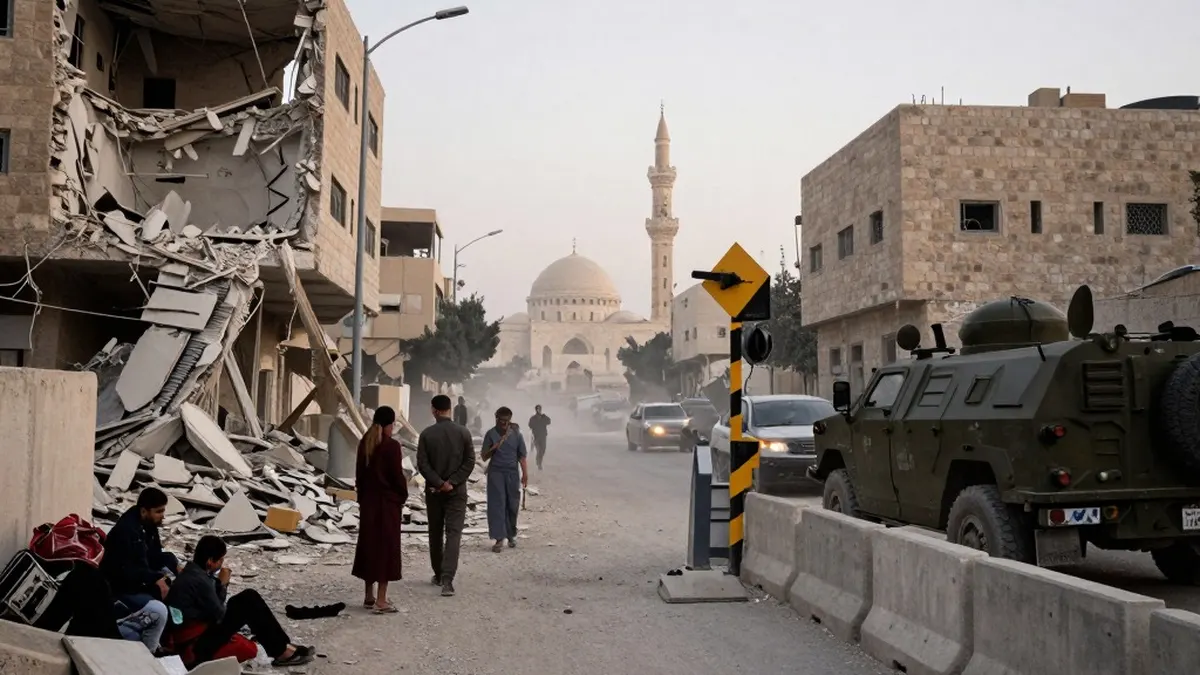
The ground shook in Hebron as Israeli military machinery tore through established neighborhoods, leaving hundreds of families without shelter just four days before a general election. The operation has sealed off the city, creating a tense and confusing environment for its 200,000 residents who are navigating a sudden restriction on movement. Footage circulating online captures the scale of the destruction, showing at least one entire street leveled by bulldozers in what local officials describe as a large-scale offensive. This is not a minor skirmish. It is a coordinated push that has upended daily life for thousands in the occupied West Bank city.
The timeline of this escalation is clear and rapid. The trigger was an attack on a military checkpoint where two Israeli soldiers were killed and three others wounded by two Palestinian gunmen. Both gunmen were killed during the incident. Prime Minister Benjamin Netanyahu announced the military response on Friday, declaring that buildings near the attack site and the neighborhoods associated with the gunmen would be destroyed. The army subsequently sealed the city and began the physical dismantling of structures. The Israel Defense Forces stated in a social media post that it had dozens of targets across the West Bank and that operations would continue for several days.
The immediate impact on residents is severe. Mayor Youssef al-Jaabari reported that the focus has been on the Ein Deir Baha and Farsh al-Hawa neighborhoods. Homes, businesses, industrial sites, and infrastructure have all taken hits. Dozens of families have been forced to spend the night outdoors. Some were ordered to leave without their vehicles. Houses are being marked for future demolition with spray paint. The mayor estimates the military intends to displace 2,500 people from an area of roughly 0.35 square kilometers. The city governor and deputy mayor have confirmed that at least 200 families have already been displaced.
Political pressure appears to be a significant factor in this timing. The general election is only days away. Netanyahu’s campaign has long rested on a promise of security. He cancelled his party’s campaign events for Friday morning and traveled to Hebron wearing protective armor. He posted a video from the scene, stating, "We will evacuate the residents, go house to house, remove the weapons we find there, and deal with and destroy all terrorist infrastructure." He also revealed he had reviewed plans for the largest military operation in the West Bank since 1967, though he did not specify when that might begin.
This approach mirrors earlier campaigns in Palestinian refugee camps in the north of the territory. In 2025, the military destroyed hundreds of homes and displaced tens of thousands of people in those areas. Demolishing the homes of Palestinians suspected of attacks is a common practice in the West Bank, though Israeli rights groups have frequently criticized it as a form of collective punishment. The current operation in Hebron follows this same pattern, linking individual security incidents to broad structural changes in the city’s layout and population distribution.
Reactions are mounting from all sides. The Palestinian Authority called for urgent international action that goes beyond mere condemnation. They seek to prevent further forced displacement. Within the Israeli government, the tone is hardening. Finance Minister Bezalel Smotrich urged a campaign in the West Bank exactly like those in Gaza or Lebanon. National Security Minister Itamar Ben Gvir called for the dismantling of the Palestinian Authority, which governs parts of the territory. Netanyahu threatened a very big surprise for the Authority in an interview with Israel’s i24 television channel released on Saturday.
The political stakes are high for local leaders as well. Mayor al-Jaabari told journalists that the operation is driven by the elections. He argued that Netanyahu and his ministers are trying to win the votes of the far right and of settlers. The sealing of the city has sharply limited the movement of residents, adding to the strain on a community already dealing with the physical destruction of their homes and workplaces. The military has not immediately answered requests for detailed comments, leaving many questions about the precise scope and duration of the operation unanswered.
What happens next remains unclear. The military has said operations will continue for several days. Whether the Hebron campaign is a standalone response or the first phase of a larger strategy since 1967 is still under review. Residents must now decide whether to stay in their marked homes or move out, often with little notice and limited access to their belongings. The coming days will test the resilience of Hebron’s residents as they navigate a landscape that is being physically and politically reshaped in real time.
The situation highlights the ongoing tension between security objectives and the daily realities of working families in the region. As bulldozers continue their work, the human cost of the conflict becomes visible in the empty streets and scattered belongings. The military’s goal is clear: to remove what it perceives as terrorist infrastructure. The residents’ goal is to maintain their homes and livelihoods. In the short term, the military has the upper hand, controlling the streets and the pace of destruction. The long term remains to be seen.
Source: BBC News