Funeral shooting kills nine in Jordan
Gunmen opened fire at a Greek Orthodox service in Karak, leaving nine dead and 40 injured.
By Miguel Hernandez ·
Nine people lost their lives and 40 others suffered injuries when armed men opened fire during a funeral service at a church in Jordan on Friday. The incident stands out as a rare and violent strike against the country's small Christian population. Local officials have already classified the event as a terrorist act committed by extremists, highlighting the sudden shift in the security landscape for this region.
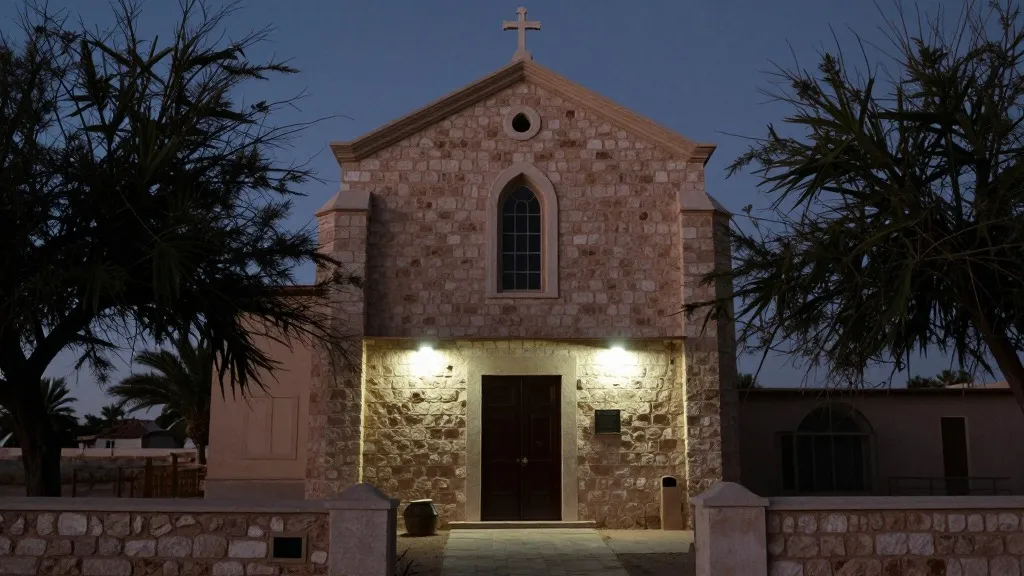
The violence unfolded at St George's Greek Orthodox church in the town of Hamoud, located within the Karak governorate. Maj gen Abdallah al-Maaytah, who leads the Public Security Directorate, confirmed that the majority of the wounded were receiving medical care. He noted that security forces were still actively searching for the individuals responsible for the gunfire. The health minister later corroborated the injury count, officially listing 40 people as having been hurt in the attack.
The timeline of this escalation builds on a period of heightened regional tension. Jordan has long been viewed as a stable ally, yet US authorities have reported foiling multiple attempted attacks by Islamist militants in recent years. The country also faced Iranian strikes earlier this year following the US and Israeli operations in February. This backdrop of conflict has made the recent funeral attack a significant development in the local security narrative.
State television aired footage from a security camera at the church that appeared to capture the moment of the attack. The video showed three figures firing toward the building from a pavement area. They used trees and a low wall for cover before running toward the entrance. Reuters verified the clip by matching the entry path and surrounding structural details, providing a clear visual account of the brief but deadly engagement.
Witnesses described a scene of intense fear and confusion. Priest Theodoros Soueiss said he and others urged the congregation to get down as the shooting began. He described a sense of panic taking hold, noting that the gunfire was indiscriminate and unpredictable. Khaled Burqan, another attendee, told state media that dozens of people were present and that the firing continued for several minutes. Ihab Ammareen recounted seeing bloodied individuals collapse to the floor, describing the atmosphere as one of crying, wailing, and screaming.
Political leaders responded quickly to the tragedy. Prime minister Jafar Hassan posted on X that the attack was a result of terrorist ideology and blind extremism. He stated that society would not be allowed to go down this path. King Abdullah, a key partner for the US in the region, visited Karak within hours of the shooting. He promised that the perpetrators would be punished with an iron fist and insisted that those trying to divide Jordanians with bullets had no chance against national unity.
In the aftermath, security forces deployed to the church site where blood was visible on the floor near the entrance. The US embassy in Amman announced on Saturday that security measures had been stepped up at malls, foreign embassies, and other locations across the country. International leaders also weighed in, with UN secretary general António Guterres condemning the violence against civilians and places of worship. Mike Waltz, the US ambassador to the UN, called it a depraved and brutal attack.
Jordan's Christian community remains a minority in a nation that hosts several biblical sites attracting pilgrims from around the world. The attack has sparked widespread shock among residents. Hani Al-Mbaydeen, speaking outside a government hospital in Karak where families gathered to support the wounded, expressed the need for the state to investigate the origins of such dark ideas. He questioned how these concepts enter the minds of the country's children, reflecting a deep concern about the future security of the community.
Source: The Guardian