Italy Moves Troops to Streets as Cost of Living Anger Boils Over
Five hundred soldiers are positioned in Milan as new demonstrations across eight cities challenge the government's response to recent unrest.
By Fatima Zayed ·
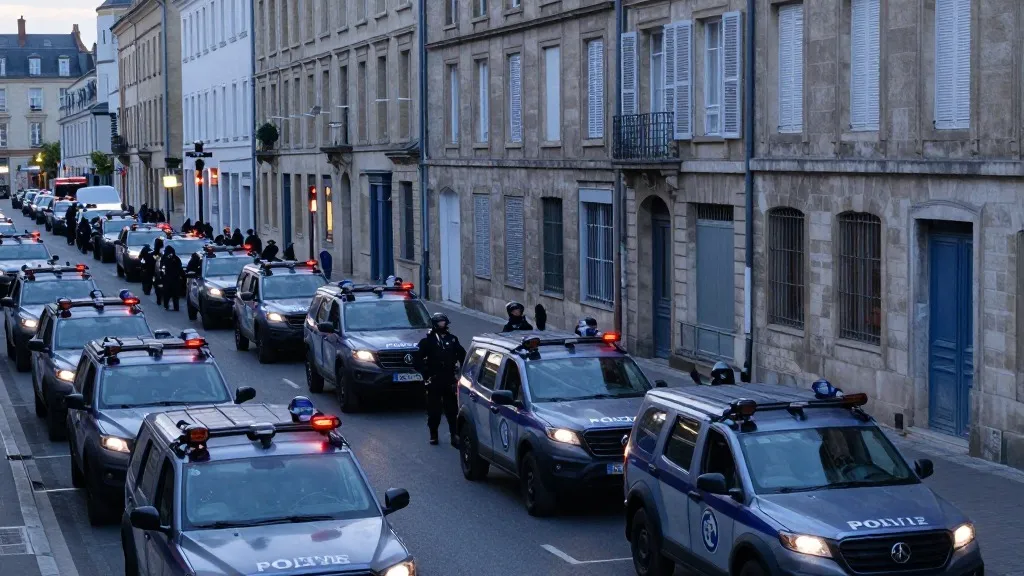
The tension in Italy has reached a breaking point as security forces prepare for a new wave of demonstrations scheduled for Saturday. Eight cities have planned protests against Prime Minister Giorgia Meloni’s right-wing administration, driven largely by the soaring cost of living. This fresh round of activism follows a chaotic week in Milan where protests turned into clashes with police and incidents of looting, setting the stage for a more organized response by both the opposition and the state.
The driving force behind this mobilization is a recently formed coalition known as the October 17 Movement. Operating alongside student federations, grassroots trade unions, and antiwar coalitions, the group has positioned itself as the main organizer. On Instagram, they declared that those denying their future are truly violent. They expressed deep distrust of the current leadership, describing the government as authoritarian. Their message is clear: the dissatisfaction with economic conditions and governance is broad and growing.
In reaction to last weekend’s disturbances, the government has tightened its security posture significantly. Authorities announced the deployment of 500 soldiers to Milan, the nation's financial hub. Police operations intensified on Friday with raids and searches in several cities targeting individuals suspected of looting and rioting. By Saturday morning, officers had conducted an additional 150 raids in the northern region of Lombardy, signaling a determined effort to identify and detain those involved in the recent unrest.
Despite the heavy police presence, organizers of the new protests emphasize their intent to remain peaceful. They have kept the specific locations of the demonstrations secret until the final hour, with three meeting points expected to be revealed on social media on Saturday afternoon. A participant identified as E warned that if the crowd gives police an excuse, the officers will charge. Another member, identified as Q, argued that there is no real distinction between violent and peaceful protesters, stating that it is just us. This strategy aims to minimize the chance of police escalation while maintaining a strong public presence.
The human cost of the previous weekend’s events remains a focal point, particularly regarding the age of those detained. Of the 271 people arrested last Sunday, 220 were under the age of 18. Some young participants reported being unexpectedly added to Telegram groups where organizers promised chaos and the opportunity to acquire goods. Lawyer Michele D'Agostino, who is defending two demonstrators aged 21 and 15, noted that the younger client did not even understand the reasons behind the protest. He had simply seen it on TikTok and went with a friend, unaware of the seriousness of the situation until it was too late.
The government is also grappling with the narrative of social media’s influence. The public prosecutor has blamed digital platforms for misleading young people into what he described as insurrectional acts. Justice Minister Carlo Nordio told Sky TG24 that the country needs to expand the capacity of its youth detention facilities in response to the mass arrests of minors. Meanwhile, police told Al Jazeera they have located and are questioning the administrator of the movement’s Instagram page. According to the daily Corriere della Sera, this individual is a 30-year-old Italian-Moroccan freelance journalist and researcher, currently under investigation on suspicion of inciting crimes.
The economic strain extends beyond the urban protests. Earlier this week, truck drivers in southern Italy set up roadblocks to protest soaring fuel prices, leaving many markets without supplies for days. To ease the pressure, the government granted tax breaks and created a special fund for farmers and fishermen on Thursday. These combined pressures highlight a government balancing immediate security concerns with long-term economic stability as the nation navigates this period of heightened civic engagement.
Source: Al Jazeera